



One of my early memories is playing in the desert sand outside my grandmother’s home. She was the matriarch of the family, and we all simultaneously adored her and were intimidated by her. Six-foot tall and part Native American, she grew up in rural Texas. She had a traumatic childhood, struck out on her own at 18 picking cotton to make a living. She attended university for as long as she could pay for it and never, ever stopped learning. She raised nine children and two step-children while working to support them, and any young woman in her orbit became her spiritual daughter. She faced down family and friends to support her husband and never compromised on her principles. As a child I could sense her intensity, but to me, she was just Gama: the grandmother with the laughing voice who made me tea and strawberries, and listened while I told her excitedly about the many different colors of sand in her backyard. I grew to know her better in my teens, when she was diagnosed with motor neuron disease. My tall, energetic grandmother slowly and painfully went from walking, to a chair-bound invalid, and finally, on her deathbed, struggled to draw each breath. But with each diminution of her physical capacity, her spirit seemed to grow. Some people cast a big shadow: Gama cast an ever-wider sphere of light. Despite pain, illness and incapacity, her home radiated serenity, faith, compassion and the same uncompromising generosity that had always characterized her: “It will flame out, like shining from shook foil. It gathers to a greatness, like the ooze of oil crushed.” Heading into the House of Healing for yet my fourth EEG, I felt the gentle weight of her presence. I was too young when she died to hold the space for her and her pain that she always held for me and my small anxieties, but now, in a time of personal weakness, it was my chance to take up the torch she had passed.
The fallout of having a status epilepticus seizure was wide and went in many directions. Some results were financial. My parents offered to pay my hospital bills, but I knew for me genuine independence started with taking responsibility for my healthcare, so I declined. I was still paying off the third EEG, so the additional debt created by seven days in a hospital followed by yet a fourth EEG was a bit daunting. I took a deep breath, and started making calls. Eventually, I got the debt payments down to something I could realistically make. One time at least, I only managed it by firmly repeating myself again and again until the customer service associate gave up and suggested I make the payments automatic. If I did that, the monthly payment would go down to what I was asking for. I closed on the offer. I’m still proud of that season. My go-to lunch for a few years was a head of lettuce with half a can of beans and some homemade dressing. Inexpensive but not unhealthy. Dinner was equally frugal. I was purse-pinched, but I made it work. And even in one lean month where I had to make it two weeks with 50 cents in the bank and a few dollars in my pocket, I was happy. At one point, my dream of living on my own looked un-obtainable. Now, it was my everyday life. Even more significant was a change in physicians. After a year of uncontrolled epilepsy, it’s recommended that patients go to an epilepsy specialist. So again, I changed neurologists. The epilepsy clinic was a cheerful place. Kids’ toys sat on the coffee table in the waiting room, and a big window looked out onto a green sward. It felt happy, safe and peaceful. Not just a neurology office, but a genuine House of Healing. Though still hopped up on four different drugs and weak from being in the hospital, I began to relax. I hadn’t realized how unsafe I felt. Growing up in the military, I instinctively divided people into sheep, sheepdogs and wolves. Yes, intellectually I knew people were more complex than that, but my emotions didn’t. Sheep were harmless if not scared. Wolves were predators that you didn’t dare show weakness. Sheepdogs were carnivores who were instinctively protective, not predatory. To my immense relief, my new epileptologist was a sheepdog. For the first time since my status epilepticus seizure, it felt like I had an ally—a brisk, no-nonsense ally who didn’t see me as an invalid or a ghost.

Only a year separated my second EEG from my third. But it was an eventful year. The ketogenic diet seemed to improve my brain fog and I think I slept better, but midway through the year, I appeared to have a tonic-clonic seizure during my sleep. My parents heard thumps, bumps and banging and came to check on me. By the time they got there, I was okay. At work, more hopeful things were happening. I became full-time. The increase in wages meant I might be able to live on my own, if I could find someone to share rent with. With some trepidation, I called my best friend from college. She was living in Wisconsin, and I was lucky enough to call just after a blizzard had swept through. She said Richmond sounded nice. I was ecstatic. When the seizure was reported to her, my neurologist suggested an additional medication: Depakote. I was unenthusiastic because of its side effects so we tried a second option: zonisamide. The zonisamide lasted for a week. I fell asleep at my desk at work, couldn’t sleep at night, felt as though ants were constantly crawling up and down my back. I called the neurologist’s office and informed the nurse that I was quitting the zonisamide—now! Two weeks later, I had a status epilepticus seizure. When a seizure continues for more than three minutes or simply doesn’t stop, the seizure is called a status epilepticus. It’s far more dangerous than a regular seizure and can cause brain damage if it continues too long. One minute I was peacefully munching peanuts in the office kitchen, the next I woke attached to a tangle of machinery. I was informed that the seizure just wouldn’t stop and that I had been anesthetized to end the seizure. They tried to bring me out after twenty-four hours or so but I acted restless and they put me under again. I was under anesthesia for three days and remained in the hospital for another four. Pneumonia was the apparent seizure trigger. I didn’t even realize I was sick. At the time, my principal emotion was sheer fatigue. An experience like that is first and foremost physically exhausting. I didn’t have the energy for emotional reactions. I saved it for the perilous trip from my hospital bed to the wheelchair. One step at a time, one problem at a time, one day at a time. If anyone asks if you want to be sedated for three days, ask them for alternative suggestions. The anesthesia left my memory a mess. Months afterwards I would receive these vivid, video-quality dumps of random memories unasked, while searching my memory only returned vague, fuzzy results. I was out of work for a month, but my boss was sympathetic. I still had my job when I got back—and an inbox piled high. I was still shaky from being in the hospital when I signed the apartment lease, but I signed it. Deborah braved the winter snow to find a housemate barely out of the hospital, but she stayed. A new life was opening up in front of me.

When I decide to do something, I tend to do it right now. No hesitation, no stopping to ponder whether I’ve taken all the eventualities into account. I act on instinct and act on it immediately. At work, this is both a strength and a weakness. Clients like getting their problem done right now. Having to go back and ask them to sign an extra form because I acted too fast to catch a mistake—less fun. But if I don’t move quickly, I lose all sense of forward momentum and start to flounder. It doesn’t work with my instincts. At my workplace, I am surrounded by my temperamental opposites. “Hoom, Hoom, let’s not be hasty…” “Let’s talk to the lawyers first,” “Give it time.” This methodical, step-by-step, let’s slow down to take into account all of the possible variables is creative and productive. It also drives me crazy sometimes. Over the years, I have learned some of the strengths of that approach. One of them is letting time solve a problem for you. Learning to listen for the instinctive signal that says the best way to handle this particular problem is to stop swimming and flow with the current. That really flies in the face of my natural, “it’s a problem; let’s break it down into parts and fix it!” Sometimes, the anxious frenzy of problem-solving is part of the problem. I’m so busy thrashing about that I can’t see the water. The only way to properly understand my environment is to be still. This doesn't mean I don't care about the problem. I'm simply skeptical that I’ve understood it properly. Allowing a current to push, tug and flow around you will teach you more about it than you pushing, tugging or scooping at it will.

Despite the hints of a new life beginning at Seal Team PT and my workplace, I was still sleeping 9 hours a night and waking up exhausted. I still couldn’t concentrate on a book and still wasn’t capable of analyzing an argument. But my absence seizures hadn’t increased. If anything, they decreased. Eventually, with some trepidation, I approached my neurologist and asked for an EEG. Something was wrong, and the argument that it was burnout from too much school was increasingly unlikely. My neurologist asked me why. It was a reasonable question. It required a logical answer. My mouth snapped shut and I looked at him in frustration. I couldn’t make one. I literally could not. And I couldn’t analyze what was wrong in order to tell him either. It would have been humorous if it weren’t so critical. When I didn’t answer, the neurologist shrugged and moved on. I switched neurologists. The new neurologist was perfectly willing to order an in-patient EEG. She explained that I might be in the hospital several days. If they didn’t observe a seizure within a certain period of time, they might have to induce one. Hopefully, I agreed and settled into the hospital for an extended stay. It would be my second EEG. My neurologist was back the next morning, with a peculiar expression on her face. “Well,” she paused, “at least we won’t need to induce a seizure.” I perked up. She then went on to explain that I was having constant sub-clinical seizure activity. “Up to 25% of your brain activity during the day is epileptic, and closer to a third at night.” My mouth dropped open. So this, this was the answer to my burnout, constant exhaustion, and the persistent sense that I was living in a world that I strained to focus on! It was my brain malfunctioning. I wasn’t lazy, undisciplined or a bad person—I just had a brain that was constantly shorting! Relief that there was something definitely, definitively wrong swept over me. My neurologist suggested I try a ketogenic diet—or rather, a Modified Atkins Diet. It was stricter than a regular Atkins diet, but less strict than a traditional ketogenic diet. A ketogenic diet requires very precise measurement and a diet that is 70% fat. It’s used for kids more than adults. Both diets required the patient remain in ketosis—i.e., their body had to use fat rather than glucose as its main fuel source. I now had two things in my life to give me hope.
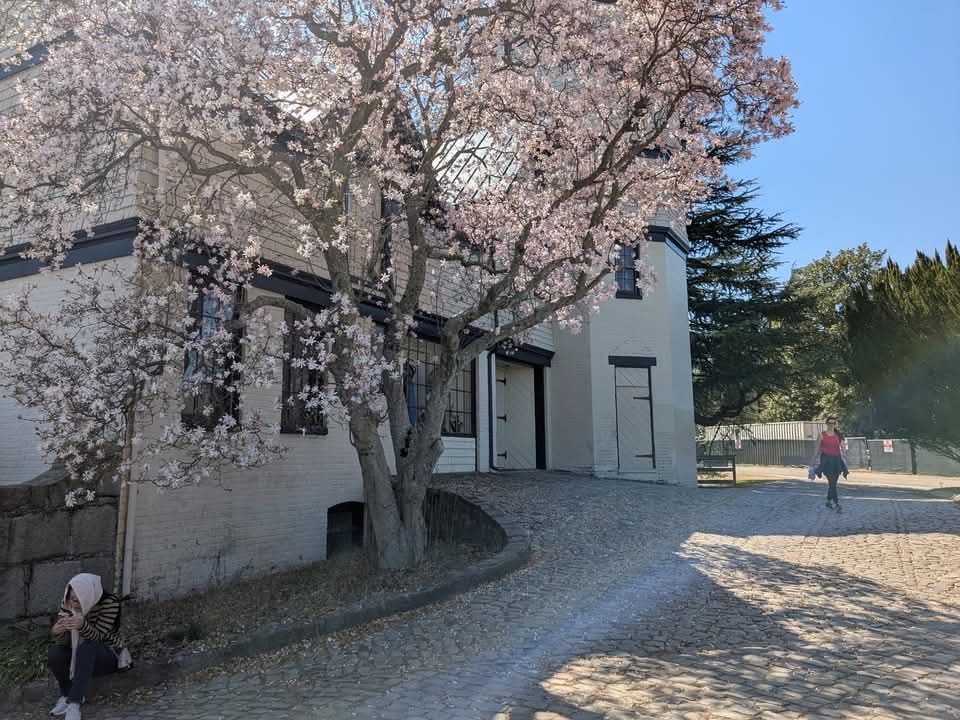
As a complement to a recently completed Chronic Disease Self-Management Program (CDSMP) class, I've challenged myself to spend time outdoors every day in May and journal the experience. If you check navigation (at the bottom of the page if you are visiting on tablet or desktop; at the top for mobile), you will see a new page entitled, "May Challenge." Please feel free to check it out!

Once, during COVID, my best friend (also my housemate) and I both got sick. We both went to the same Patient First, at the same time. We had similar symptoms. We were even in neighboring exam rooms and chatted through the walls while we were waiting. When the test results came back, not surprisingly, we had the same diagnosis: flu with bronchitis. But our clinic experiences were very different. I was admitted faster, seen sooner, and received an X-Ray, which Deborah was not offered. Deborah, who is rarely sick, felt the need to analyze this experience afterwards. What made the difference? Her opinion was that I was simply better at looking sick. She had a point. My cough was not shy. Hers was much less assertive. But I thought the real difference lay in what we had told the receptionists. Deborah had told the lady she had a cold and needed a note from the doctor verifying it wasn’t COVID in order to go back to work. One booth over, I gave another lady a comprehensive list of symptoms. No assumptions. We, the patients, framed our problems differently. Our community, the healthcare providers, therefore treated our problems differently. This is not unusual. Being a good patient is a skill. It takes experience, practice, awareness and a certain amount of assertiveness. Hospitals and doctor’s offices are staffed with people who are often overwhelmed and suffering from burnout. They cannot read your mind. They also belong to a subculture that has a very definite way of thinking and seeing the world. Like all of us, they sometimes need the information presented in a way that makes sense to them. This is not just about self-advocacy. This is about acknowledging and accepting that as someone with a chronic disease, you are part of a larger community that includes your doctors, nurses, insurance providers and anyone else you rely on for medical care. Support your community—by learning to help them help you. To the patients that are exhausted and feel that this is not taking their difficulties into account—I hear you. This is meant to be encouragement, not one more standard that you’re not able to meet. The small things matter. You have more control than you think. To the extent that you are able at a particular point in time (heaven knows that varies!), what are the things you can do to help make things happen? Whether it’s remembering to give your medical record number when requesting a medication refill (yes, that was me!), or responding sympathetically rather than with hostility when an overwhelmed support person makes an honest mistake, you can make a difference in their lives as well as in your own patient experience by learning to see the system as a system, and the people as people. Your meds are supposed to get refilled. Did you verify that happened? Did you follow up with your insurance company to make sure that EEG is covered? Did you make sure the DMV waiver allowing you to drive was signed by your doctor and sent before its deadline? Did you create a pre-appointment checklist or bring notes on things to bring up with your neurologist? Have you been proactive about trying to save money for emergencies? What framing does your neurologist hear? What does he or she not hear? I actually read a medical memoir or two to see things from a doctor’s perspective. It was surprisingly helpful. We can be creative. We are always capable of more than we think.
Thirty-six years old. Entering another hospital for another EEG. I didn’t know it yet, but it would be my last. I skipped down the steps to the hospital’s ground floor wondering what this EEG would say. Would there be any more sub-clinical seizure activity? Was my head really fixed? My feet hit the bottom of the stairs and I walked into my past. Greenish-beige walls. An elevator. The feel of air against my face and soft, urgent voices as I was sped on a stretcher along a hospital corridor. The chilliness of the air as I emerged from a seizure while being carried out of the house on a stretcher. My mother’s panicked voice. My dad talking to the EMTs and the slam of the ambulance door as I realized I was going to be left alone in the back of the ambulance with two EMTs I didn’t know. The vibration of the ambulance floor as I lay on it. The staticky sound of EMTs talking through the intercom. It was my first tonic-clonic seizure. I was 16. The twenty-year road to my final EEG did not begin with my first tonic-clonic seizure. I was diagnosed a year before, with Juvenile Absence Epilepsy (JAE). I still remember my very first EEG. I was about 15 and thought the whole procedure was wildly exciting. Electrodes were attached to my head with glue, and then hooked up to a machine that spat out red-lined graph paper with multiple lines of black squiggles. The glue was very cold, but having electrodes attached to my head made me look like a very long octopus (or so I hoped). The tech on duty indulgently answered question after question until finally promising me a piece of the EEG for My Very Own if I would lie still and stop messing up his results by trying to see over his shoulder. Suitably bribed, I settled down. At the end of the EEG, I was awarded my piece of red graph paper—and shown the two drawn x’s where the tech had caught absence seizures, moments where (as best I recall) multiple lines on the graph had spiked simultaneously in the same way. Proof that my absent-mindedness was actually epilepsy. At fifteen, it was just a data point. I was more interested in my next library visit.
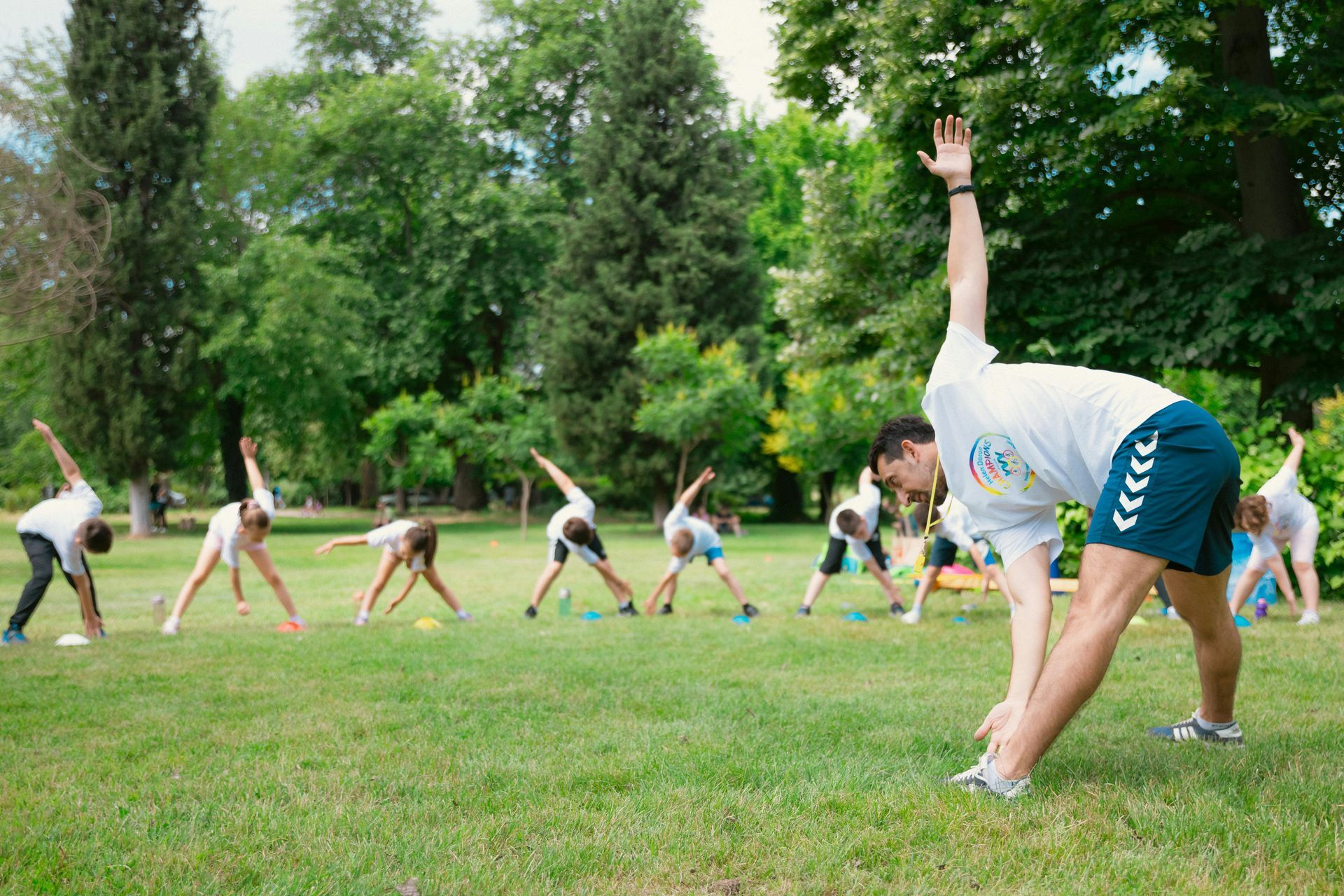
A friend once asked me if I would write a memoir. I told her, “No.” She asked why not. I told her, “because I’m afraid the thesis would be something like, ‘smart aleck hits life. Life hits back!’” This is not a flattering narrative. But all the same—I am grateful. Without my struggles, I’d be smaller and unhappier. As a kid, I was your quintessential bookworm. While my sister was out climbing trees and breaking limbs, I was combing the local library in search of books I hadn’t read. I catalogued people based on categories in psychology books but rarely engaged with them as people. Human beings were illogical, irrational and unpredictable. Stories made sense. Logic made sense. Figuring people out was for someone with a different kind of brain. Left to my own devices, I might have gotten my Ph.D. and found a small niche somewhere that allowed me to avoid people. But in my second year of graduate school, my ability to read books that contained complex arguments or organize a paper began to decline. First slowly, then more quickly, my work deteriorated. My ability to concentrate on a conversation and sleep deeply were also affected. My condition spiraled until I was lucky to finish my thesis and graduate. I was accepted for a doctoral degree, but staring at the schedule for an offered teaching assistantship, I had to admit that I was no longer capable of the work. It wasn’t just the end of a dream. When I gave up on that dream, I also gave up on a version of myself as the absent-minded professor. I literally lived in my parent’s attic, re-reading books I had read before because I often couldn’t comprehend or remember a new one. I was living the life of a zombie. Neither alive nor dead. My world narrowed to the four walls of my parents’ attic and the small, rectangular room where I worked part-time, entering data and scanning documents. I still remember the turning point—walking my laundry up the stairs. Inside the house it was dark, but someone had left the front door open and the sun was shining on green grass. It was a Plato moment. I was in the shadow cave and all I had to do to live again was go outside. My angst, boredom and shame were to some extent a personal choice—the decision not to change. Stopping, I promised myself that I would take the next opportunity I could to get out of the house, no matter how out of my box it was. The next morning, I was sitting at breakfast when my sister casually mentioned that she was thinking of joining a fitness program called Seal Team PT. Fitness and PT were my sister’s hobby, and normally I would have listened with half an ear. This time, I shocked everyone (including myself) by asking if I could come too. “Sure,” Eden said. “But be aware, in order to get there on time, we’ll have to leave at 5 am.” Despite this daunting statement, I signed up. Seal Team PT was intense. They started you off with a week-long boot camp, complete with running, pushups and motivational yelling. The first day, I wasn’t able to complete the training run. Next day, I brought water with me. I finished the run. To my astonishment, this small exercise in problem solving led to a public commendation when I graduated. The instructors didn’t care about my physical weakness—they cared that I finished the program despite it. It was the first time I’d excelled at anything physical. Much to my surprise, Seal Team PT became something I looked forward to. Rolling on the grass, running at 6 AM, and doing pushups in the rain were fun. I went to the team social gatherings, learned to mingle, and began to investigate the species homo sapiens for the first time. My physical problems still weren’t solved. My life still needed to change. But I was learning that adaptability was a skill—and I was good at it.

Dating after Divorce: A Single's Guide